Space News
 American
Space News for 5 July 2023
American
Space News for 5 July 2023
A 'double punch' of solar storms could smash into Earth and spark widespread auroras this week
SPACE.com - 5 Jul 2023 18:00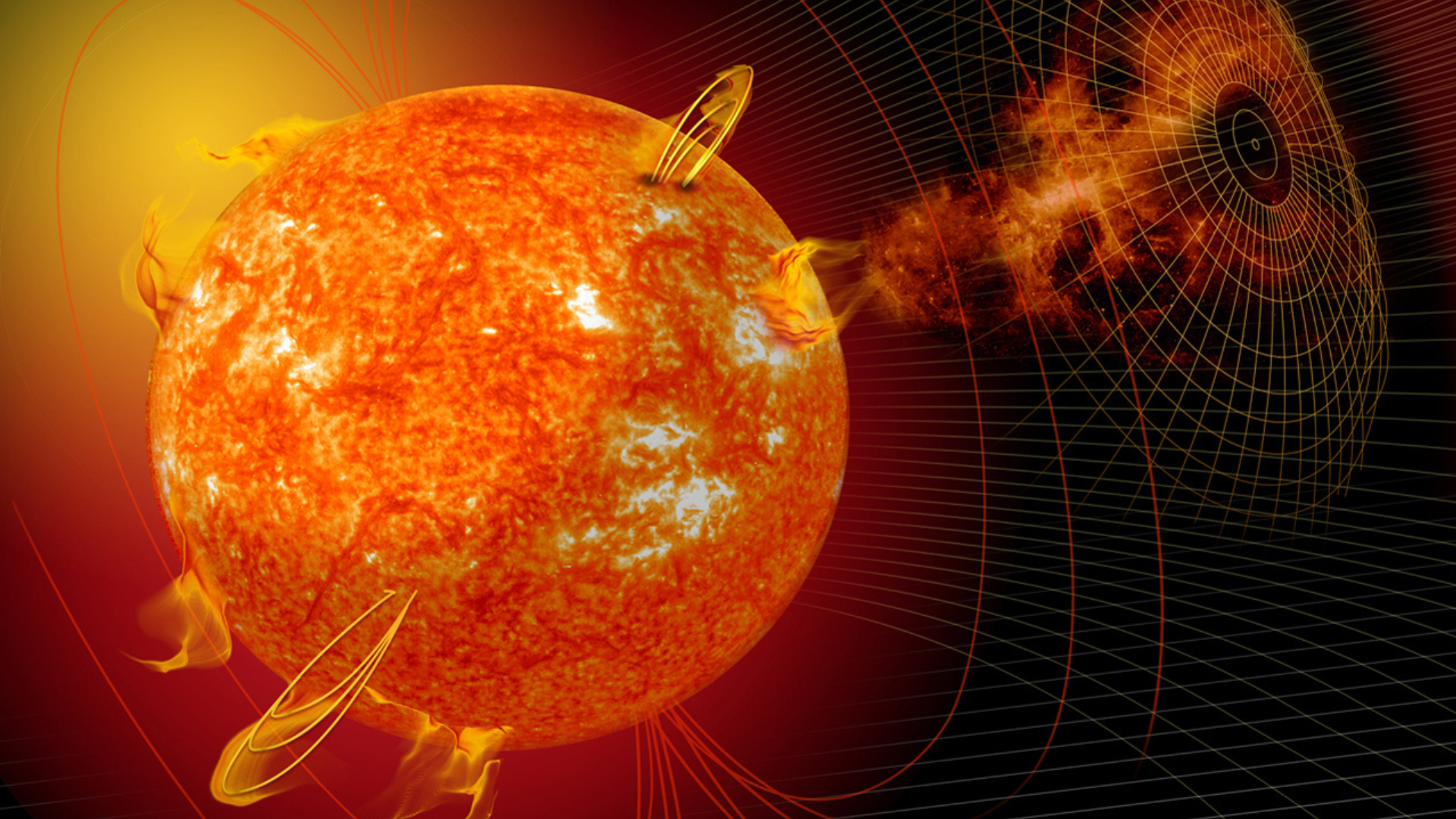 As the U.S. celebrated July 4, the sun hosted its own fireworks display in the form of a coronal mass ejection "double punch" that NASA predicts could strike Earth on Friday (July 7).
Radio noise from satellite constellations could interfere with astronomers
Space News - 5 Jul 2023 13:45
Large satellite constellations can unintentionally generate electromagnetic noise, creating an additional source of interference for radio astronomers. The post Radio noise from satellite constellations could interfere w...
ESA's Euclid Mission is Off to Explore the Dark Universe
Universe Today - 5 Jul 2023 00:05 The Euclid space telescope, the ESA's next-generation astrophysics mission, was successfully launched to space! The post ESA's Euclid Mission is Off to Explore the Dark Universe appeared first on Universe Today.
Alien's-eye view of the Milky Way: Our galaxy is unusual but not unique
SPACE.com - 5 Jul 2023 12:00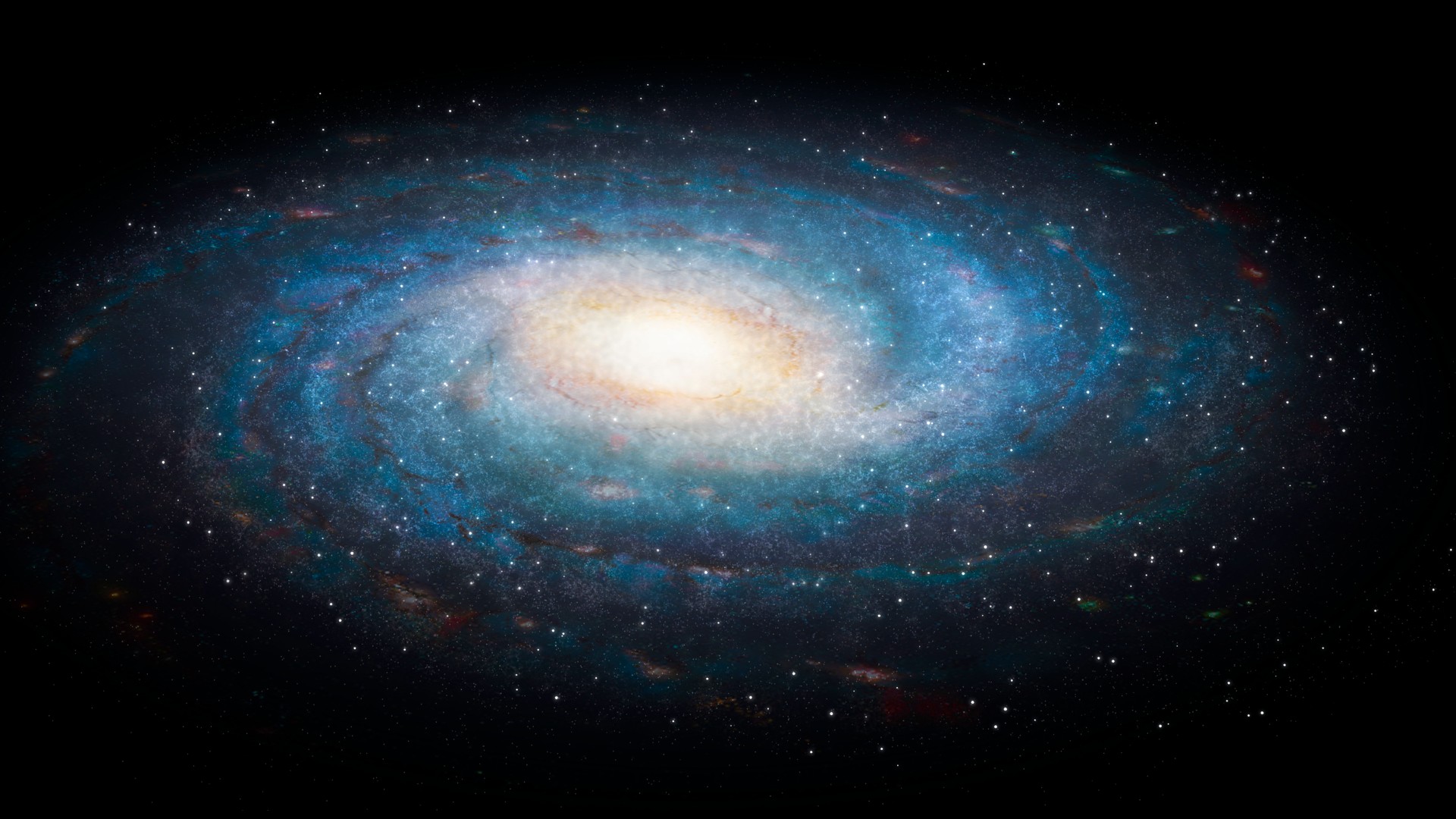 Astronomers have now deduced what alien scientists might see when they gaze at the Milky Way from afar. Our home galaxy is unusual but not unique, at least when it comes to chemistry.
Regulatory uncertainty as commercial human spaceflight takes off
Space News - 5 Jul 2023 11:00
As two companies prepare to begin or resume commercial suborbital human spaceflights, they are facing uncertainty about how the safety of the people on those flights will be regulated. The post Regulatory uncertainty as ...
First ultraviolet data collected by European Space Agency's JUICE mission
Phys.org - 5 Jul 2023 22:13 The Southwest Research Institute-led Ultraviolet Spectrograph (UVS) aboard ESA's Jupiter Icy Moons Explorer (JUICE) spacecraft has successfully completed its initial commissioning following the April 14 launch.
NASA's moon rover prototype conquers steep, scary lander exit test
Phys.org - 5 Jul 2023 22:08 NASA's VIPER--short for Volatiles Investigating Polar Exploration Rover--recently completed another successful round of rigorous tests of the agency's first robotic moon rover's ability to drive off the Astrobotic Griffi...
Cosmic 'sandwich' theory could explain how smaller planets are formed
SPACE.com - 5 Jul 2023 22:00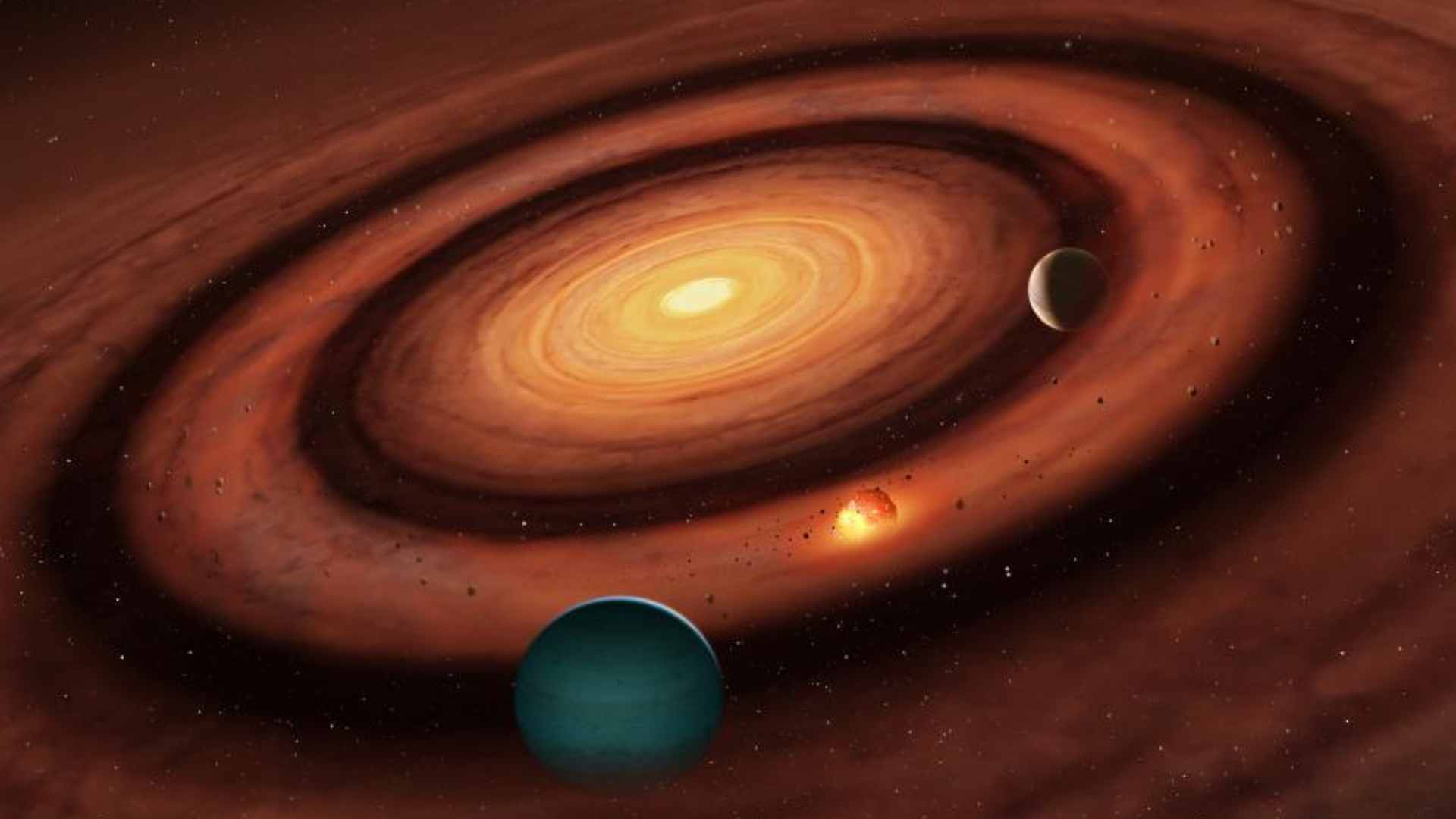 Do you want that toasted? A newly suggested planet formation process suggests smaller worlds could be created when a gas and dust filling is squeezed between two larger planets.
If There Were a War in Space, Debris Would Destroy all Remaining Satellites in About 40 Years
Universe Today - 5 Jul 2023 21:38 On one particular day in 2021, astronauts and cosmonauts aboard the ISS must have felt a pin-prick of fear and uncertainty. On November 15th of that year, Russia fired an anti-satellite missile at one of its own defunct ...
Gravitational waves could help us find out how fast the universe's expansion is accelerating
SPACE.com - 5 Jul 2023 21:00 Gravitational waves from merging black holes distorted due to a phenomenon predicted by Einstein could be a new way of measuring the rate of cosmic expansion.
Using machine learning to estimate stellar ages
Phys.org - 5 Jul 2023 20:54 Researchers from Keele University have developed a machine learning technique that helps astronomers better estimate the ages of stars from the chemicals within their atmospheres. The new research will be presented at th...
Video: European satellite captures lightning strikes
Phys.org - 5 Jul 2023 20:41 The first ever satellite instrument capable of continuously detecting lightning across Europe and Africa has now been switched on. New animations from the innovative 'Lighting Imager' confirm the instrument will revoluti...
Why the day is 24 hours long: Astrophysicists reveal why Earth's day was a constant 19.5 hours for over a billion years
Phys.org - 5 Jul 2023 20:38 A team of astrophysicists at the University of Toronto (U of T) has revealed how the slow and steady lengthening of Earth's day caused by the tidal pull of the moon was halted for over a billion years.
Study shows the Earth formed from dry, rocky building blocks
Phys.org - 5 Jul 2023 20:00 Billions of years ago, in the giant disk of dust, gas, and rocky material that orbited our young sun, larger and larger bodies coalesced to eventually give rise to the planets, moons, and asteroids we see today.
The Early Universe Ran in Slow Motion
Universe Today - 5 Jul 2023 19:42 One of Einstein's predictions is that we should see time moving at different rates at different ages of the Universe. Researchers have confirmed this prediction out to half the age of the Universe using Type 1a supernova...
Black hole ripples could help pin down expansion of universe
Phys.org - 5 Jul 2023 19:25 The echoes of light from jets launched from black holes offers a new way to pin down the distance to these exotic objects and to study a largely unobserved population in the center of the Galaxy. It could also even help ...
New radio observations confirm unintended electromagnetic radiation emanating from large satellite constellations
Phys.org - 5 Jul 2023 19:23 Scientists from a number of leading research institutions including the Max Planck Institute for Radio Astronomy in Bonn, Germany, used the Low Frequency Array (LOFAR) telescope to observe 68 of SpaceX's satellites. The ...
Time appeared to move 5 times more slowly in 1st billion years after Big Bang, quasar 'clocks' reveal
SPACE.com - 5 Jul 2023 19:00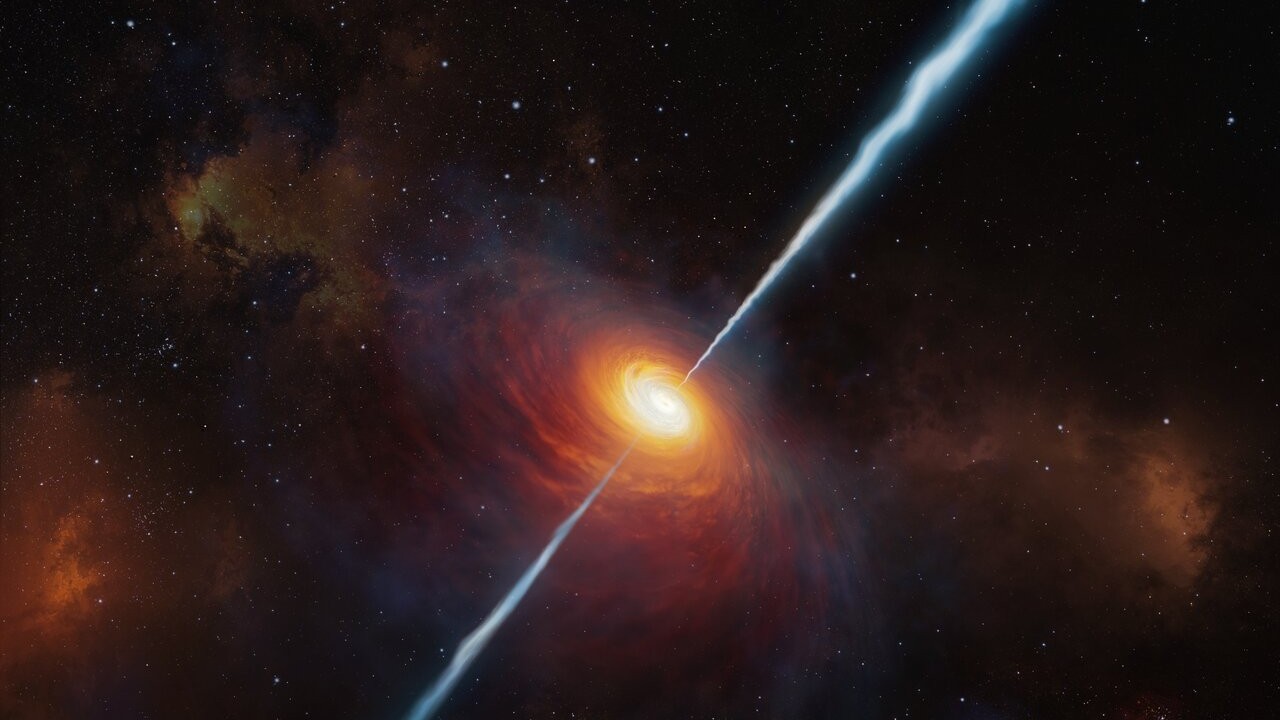 Time dilation, brought about by the relativistic expansion of space, has resulted in the observed slowing of 'clocks' in the early universe.
Large sub-surface granite formation signals ancient volcanic activity on moon's dark side
Phys.org - 5 Jul 2023 18:35 A large formation of granite discovered below the lunar surface likely was formed from the cooling of molten lava that fed a volcano or volcanoes that erupted early in the moon's history--as long as 3.5 billion years ago...
Webb locates dust reservoirs in two supernovae
Phys.org - 5 Jul 2023 18:35 Supernovae, the explosive deaths of stars, are some of the universe's biggest bursts of energy and light. When they erupt, one supernova can shine even brighter than an entire galaxy.
'Terminator 3': Average movie, fantastic ending
SPACE.com - 5 Jul 2023 18:00 Twenty years on, 'Rise of the Machines' powerful and bleak conclusion remains one of the highlights of the killer cyborg franchise.
NASA Invites Media to Next SpaceX Commercial Crew Space Station Launch
NASA Breaking news - 5 Jul 2023 17:49 Media accreditation now is open for the launch of NASA's seventh rotational mission of a SpaceX Dragon crew spacecraft and Falcon 9 rocket to the International Space Station.
 Global
 Great Britain
 Indian
 South Africa